Endometriosis affects millions of people, but getting answers about it can still take far too long.
From painful periods that stop you in your tracks to fatigue, heavy bleeding and pain during sex, endometriosis can show up differently for everyone. And because many of its symptoms overlap with other conditions, knowing what to look out for matters.
So, what actually is endometriosis, what are the symptoms, and what can help? Let’s get into it.
What is endometriosis?
Endometriosis is a long-term condition where cells similar to those in the lining of the womb grow elsewhere in the body.
It’s most commonly found around the pelvis, including the ovaries and fallopian tubes, but it can also affect areas such as the bladder and bowel.
These patches of endometriosis can break down and bleed, causing inflammation, pain and sometimes scar tissue or adhesions.
And while endometriosis is commonly diagnosed in women and girls from puberty through to menopause, it can affect anyone who has or has had a womb.
What are the symptoms of endometriosis?
Endometriosis looks different for everyone. Some people experience severe symptoms, while others may have very few.
Common symptoms can include:
- Severe period pain that stops you from going about your normal activities
- Pain in your lower tummy, pelvis or back
- Heavy periods, including needing to change your pad or tampon every 1–2 hours or bleeding through your clothes
- Pain during or after sex
- Pain when weeing or pooing
- Extreme tiredness or fatigue
- Feeling sick, constipation or diarrhoea
- Difficulty getting pregnant
- Low mood or anxiety
The tricky part? Many of these symptoms can also be caused by other conditions, which is one of the reasons getting an endometriosis diagnosis can take time.
If your period pain is affecting your everyday life, work or relationships, or something about your cycle simply doesn’t feel right, it’s worth speaking to your GP.
Pain that stops you living your life shouldn’t just be written off as “a bad period”.
What causes endometriosis?
We still don’t know exactly what causes endometriosis.
There are a number of theories and research is ongoing, but there currently isn’t one known cause. What we do know is that endometriosis is a real medical condition and symptoms deserve to be taken seriously.
How is endometriosis diagnosed?
Getting a diagnosis can take time because symptoms can overlap with conditions including adenomyosis, fibroids, pelvic inflammatory disease and IBS.
Your GP will usually start by asking about your symptoms and medical history and may carry out an examination or blood tests.
If endometriosis is suspected, you may be referred to a gynaecologist for further tests. These can include an ultrasound, MRI scan or laparoscopy.
It can be really useful to keep a record of your symptoms before an appointment. Note things like when pain happens, how severe it is, how often you’re changing your period products and whether your symptoms are affecting work, sleep, exercise or everyday life.
If you use a Mooncup, the measurement markings can also help you roughly track how much you’re bleeding, giving you another piece of information to discuss with your doctor.
How is endometriosis treated?
There currently isn’t a cure for endometriosis, but there are treatments that can help manage symptoms.
What works will depend on your symptoms, their severity and factors such as whether you’re trying to get pregnant.
Treatment can include:
- Pain relief, such as paracetamol or ibuprofen
- Hormonal treatments, including some forms of contraception
- Surgery to remove areas of endometriosis
- In some cases, more extensive surgery where symptoms are severe or other treatments haven’t worked
Your doctor or specialist can talk you through the different options, including their potential benefits and side effects.
Living with endometriosis
Endometriosis isn't just a painful period.
Chronic pain and fatigue can affect work, relationships, exercise, social plans, sex, sleep and mental health. For some people, fertility can also be affected.
That can be a lot to carry, particularly when symptoms aren’t visible to everyone else.
Support is available. Organisations such as Endometriosis UK offer information, helplines, local support groups and online communities for people living with endometriosis.
Choosing period care when you have endometriosis
When you’re living with endometriosis, your period care needs can look different from one day, or one cycle, to the next.
Heavy bleeding can be one symptom of endometriosis, while pain or sensitivity can mean comfort matters just as much as absorbency. And while some people are happy using internal period products, others may prefer external protection, particularly on more painful days.
There’s no single “best” period product for endometriosis. What matters is having options that work for your body, your flow and how you’re feeling that day.
That’s why we make period care designed around protection, comfort and choice.
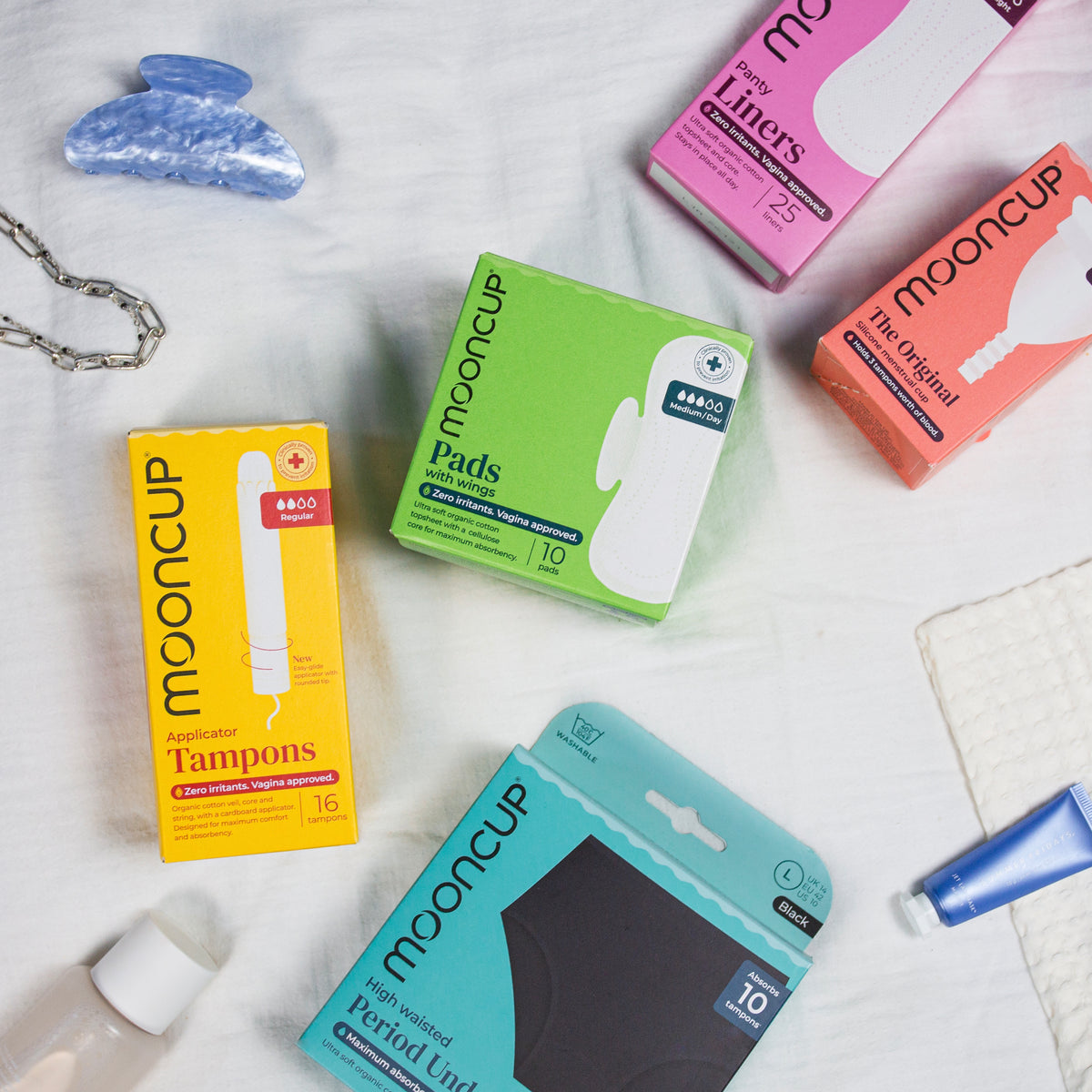
For heavy flow: Mooncup Pads
When bleeding is heavy, you want period protection you can trust.
Mooncup Pads are as absorbent as the leading brand, with a fast-absorbing cellulose core that locks blood into the centre of the pad.
And because leaks don’t always politely stay in the middle, our pads have 100% leakproof wings. The leakproof barrier extends into the wings, wrapping securely around your underwear to help block side leaks and keep your pad where it belongs.
They’re available in Medium/Day, Heavy/Night and Maxi/Night+, so you can choose the level of protection that works for your flow.
For comfort: soft, breathable organic cotton
When you’re already dealing with period pain or discomfort, the last thing you need is uncomfortable period care.
The layer of our pads that sits against your skin is made from 100% GOTS-certified organic cotton. It’s soft and breathable, with no synthetic fragrances, dyes, petroleum plastics or plastic-based SAPs.
Our pads are also clinically proven to help prevent irritation, giving you comfortable protection without unnecessary extras.
For longer-lasting protection: the Mooncup
For people who are comfortable using internal period products, the Mooncup menstrual cup can be another option.
The Mooncup holds three times more than a regular tampon, which can be particularly useful for people experiencing heavier periods. It can be worn for up to 12 hours depending on your flow, meaning fewer changes throughout the day.
The measurement markings also allow you to roughly track your blood loss, which can be useful information if you’re discussing heavy periods with your GP or gynaecologist.
If you have endometriosis and are unsure whether a menstrual cup is suitable or comfortable for you, speak to your doctor or specialist.
Period care should work around you
Endometriosis can make periods difficult enough. Your period care shouldn’t make them harder.
Whether you want the high-capacity protection of a menstrual cup or the comfort and absorbency of an organic cotton pad, having options means you can choose what feels right for your body, your flow and your day.
No fragrances. No dyes. No unnecessary extras. Just period care that works with your body, not against it.
When should you speak to your GP?
If you think you might have endometriosis, your symptoms are affecting your everyday life, or treatments you’ve already tried aren’t helping, speak to your GP.
Keeping a symptom diary can help you explain what you’re experiencing. And remember: severe period pain that regularly stops you doing normal activities is worth investigating.
Periods can be uncomfortable. They shouldn't have to run your life.
Blog disclaimer
Our blog is intended to share information and ideas around periods, health, and sustainability. While we do our best to keep content accurate and up to date, things can change over time. The information here is not intended as medical advice — for any health-related concerns, please consult a qualified healthcare professional. For more information on our claims, please see our Claims Page, and for the most up-to-date product information, please visit our Product Pages.