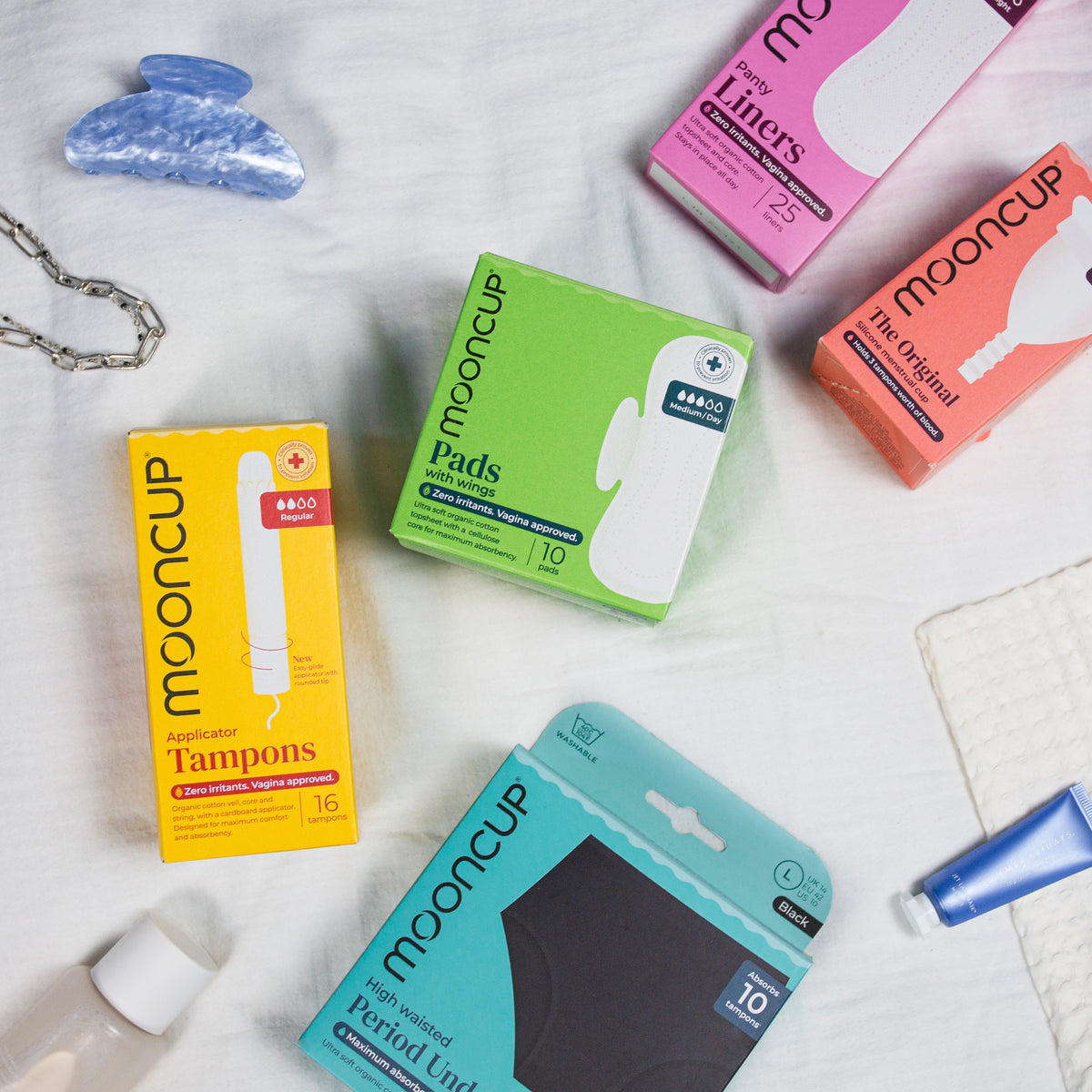
Postpartum bleeding isn't a period. So why settle for period protection that isn't made for it?
You've packed the hospital bag. You've probably Googled approximately 400 things about giving birth. But have you thought about what you'll need for the bleeding afterwards?
Because whether you have a vaginal birth or a caesarean, postpartum bleeding is part of recovery. And it can be heavier, longer-lasting and considerably less predictable than your usual period.
The good news? There are products designed to make those first weeks a little more comfortable.
Let's talk about what postpartum bleeding actually involves, what to look for in your protection and which products are worth having ready.
First things first: what is postpartum bleeding?
Postpartum bleeding is called lochia. It's the blood, mucus and tissue your uterus sheds after giving birth as it recovers from pregnancy.
And no, it's not your period.
Lochia happens after both vaginal and caesarean births. It's generally heaviest in the first few days, before gradually becoming lighter over the following weeks.
You might notice the colour changing, too. It typically starts bright red, then becomes pinkish or brown, before eventually turning yellowish or white.
Postpartum bleeding commonly lasts around four to six weeks, although it can continue for longer.
Everyone's recovery looks a little different, but if you're soaking through a pad in an hour, passing very large clots, feeling faint or experiencing sudden heavy bleeding, seek urgent medical advice.
Why do you bleed after giving birth?
During pregnancy, your uterus builds up a thick lining and develops an increased blood supply to support your baby and placenta.
After birth, your body needs to shed the remaining blood and tissue while your uterus gradually returns towards its pre-pregnancy size.
That's where lochia comes in.
You may notice bleeding becomes temporarily heavier during breastfeeding or after physical activity. This can happen as your uterus contracts, but any sudden or concerning changes should be discussed with your midwife or healthcare professional.
And because lochia isn't quite the same as a period, your usual period products might not be the best option for those first few weeks.
What are the best products for postpartum bleeding?
There's no single product that's right for every stage of recovery.
Bleeding is often heavier immediately after birth, then gradually becomes lighter. Your comfort, sensitivity and the type of birth you've had will also influence what works best.
Here are four options worth knowing about.
1. Postpartum pads: for those first days after birth
If there's one thing worth putting in your hospital bag, it's a decent supply of postpartum pads.
Unlike standard period pads, maternity and postpartum pads are designed for the heavier bleeding that follows birth. They're typically longer, wider and more absorbent, giving you extra coverage when you need it.
And because your skin may be tender, healing or stitched, softness matters just as much as absorbency.
Meet Mooncup Maternity & Postpartum Pads.
Designed specifically for lochia and postpartum discharge, with:
-
Extra-long, wide coverage for heavier bleeding.
-
Heavy-flow absorbency and leakproof protection.
-
Secure wings that stay put, day and night.
-
A soft, 100% organic cotton topsheet that's gentle on tender skin.
-
No SAPs, synthetic fragrances or dyes.
Soft where it matters. Strong where it counts.
A hospital bag essential, and a softer landing for the weeks after.
2. Heavy-flow period pads: for when bleeding begins to settle
As postpartum bleeding gradually becomes lighter, you might find you no longer need the extra coverage of a maternity pad.
That's where a good heavy-flow period pad can come in.
Mooncup Maxi/Night+ Pads offer serious absorbency, a soft organic cotton topsheet and leakproof wings, making them a practical option as your needs change.
Just remember that postpartum bleeding doesn't follow a fixed schedule. There's no need to switch products until you're comfortable doing so.
3. Panty liners: for lighter bleeding and discharge
Towards the end of postpartum bleeding, you may find you're dealing with occasional spotting or lighter discharge rather than a heavier flow.
Panty liners can be useful here.
Mooncup Panty Liners are soft, breathable and made for those lighter days when a full pad feels unnecessary.
Small but mighty. Just how we like them.
4. Period pants: for reusable protection beyond postpartum
Period pants can be a comfortable, reusable option once your bleeding has settled enough for their absorbency to suit your needs.
Mooncup High Waist Period Pants offer a comfortable high-waisted fit and absorbency for up to 10 tampons' worth of blood.
They're particularly useful for lighter postpartum bleeding, the eventual return of your period and everything in between.
For the earliest days after birth, when bleeding can be especially heavy, we'd recommend starting with dedicated postpartum pads so you can monitor your bleeding and change them regularly.
Can you use period pants straight after giving birth?
It's understandable to want something comfortable and familiar, particularly when your body's recovering.
But immediately after birth, maternity pads are generally the better starting point.
Postpartum bleeding can be heavy, and healthcare professionals may need to assess how much you're bleeding. Disposable postpartum pads make this easier to monitor.
As your bleeding becomes lighter, period pants can offer a comfortable alternative, provided their absorbency is suitable.
And unlike disposable maternity pads, you can keep using them when your periods eventually return.
What should you look for in postpartum pads?
Not all pads are created equal, especially when you're wearing them day and night for weeks.
Here's what we'd prioritise:
- Absorbency that can handle heavier bleeding. Postpartum bleeding is often heavier than a period, particularly in the first few days.
- Extra coverage. Longer, wider pads can help prevent leaks when you're lying down, resting or moving around.
- A soft topsheet. Your skin may be sensitive after birth, so choosing something gentle like organic cotton against your vulva and perineum can make a real difference to comfort.
- Breathable materials. Many conventional pads contain petroleum-based Super Absorbent Polymers (SAPs), which can contribute to heat and irritation. Mooncup's pads are SAP-free.
- A secure fit. Because nobody wants to be adjusting a pad while holding a newborn.
And whatever you choose, remember to change your pads regularly and follow any advice from your midwife about caring for stitches or wounds.
How many postpartum pads should you pack in your hospital bag?
More than you think you might need.
Bleeding is usually heaviest immediately after birth, and you may need to change your pad frequently.
The NHS recommends packing two packets of super-absorbent sanitary or maternity pads in your hospital bag.
It's also worth having a few extras ready at home, so you're not adding an emergency pad run to your first week with a newborn.
Care for the fourth. That bit when you're both in nappies.
There's a lot of thought that goes into preparing for a baby.
The hospital bag. The tiny clothes. Everything that might touch their skin.
But what about yours?
The fourth trimester is the first 12 weeks after birth, when your body is recovering from pregnancy and childbirth.
And it deserves care built for this moment, not something borrowed from the period aisle.
That's why we've created our Mooncup Maternity & Postpartum Pads, alongside our Bump to Baby Bundle, bringing together Postpartum Pads, Heavy/Night Pads, Panty Liners and High Waist Period Pants.
From heavier bleeding to lighter days and the return of your period, we've got your pants covered.
Because birth isn't where the care stops.
Blog disclaimer
Our blog is intended to share information and ideas around periods, health, and sustainability. While we do our best to keep content accurate and up to date, things can change over time. The information here is not intended as medical advice — for any health-related concerns, please consult a qualified healthcare professional. For more information on our claims, please see our Claims Page, and for the most up-to-date product information, please visit our Product Pages.