Forget the 47-step checklist. Here's what your recovering body actually needs.
There's no shortage of advice about what to buy before having a baby.
The pram. The cot. The changing mat. The tiny socks that will mysteriously disappear within approximately 48 hours.
But while everyone's busy preparing for the baby's arrival, there's another person who needs looking after, too.
You.
Because giving birth is a pretty big deal. And whether you've had a vaginal birth or a caesarean, your body has some serious recovering to do.
So, before you fill another online basket with things you might never use, let's talk about the postpartum essentials actually worth having ready.
First, what is postpartum recovery?
The first 12 weeks after giving birth are often called the fourth trimester.
It's a time when your body is recovering from pregnancy and childbirth, your hormones are shifting and you're getting to know a brand-new human.
You might be healing from stitches or a caesarean incision, experiencing postpartum bleeding, navigating feeding and doing all of this on considerably less sleep than you're used to.
And while there's plenty of conversation about what babies need during these early weeks, postpartum recovery deserves just as much attention.
The good news? You don't need a cupboard full of expensive products to prepare.
Just a few essentials, some practical support and a little space to recover.
1. Maternity pads. And plenty of them.
Let's start with something that absolutely deserves a place in your hospital bag.
After giving birth, you'll experience vaginal bleeding and discharge called lochia.
It happens after both vaginal and caesarean births and is generally heavier than your usual period, particularly during the first few days.
And because postpartum bleeding can last for several weeks, your regular period pads might not offer enough coverage at first.
That's where maternity pads come in.
Look for extra-long, wide protection, good absorbency and a soft topsheet that's comfortable against tender, healing skin.
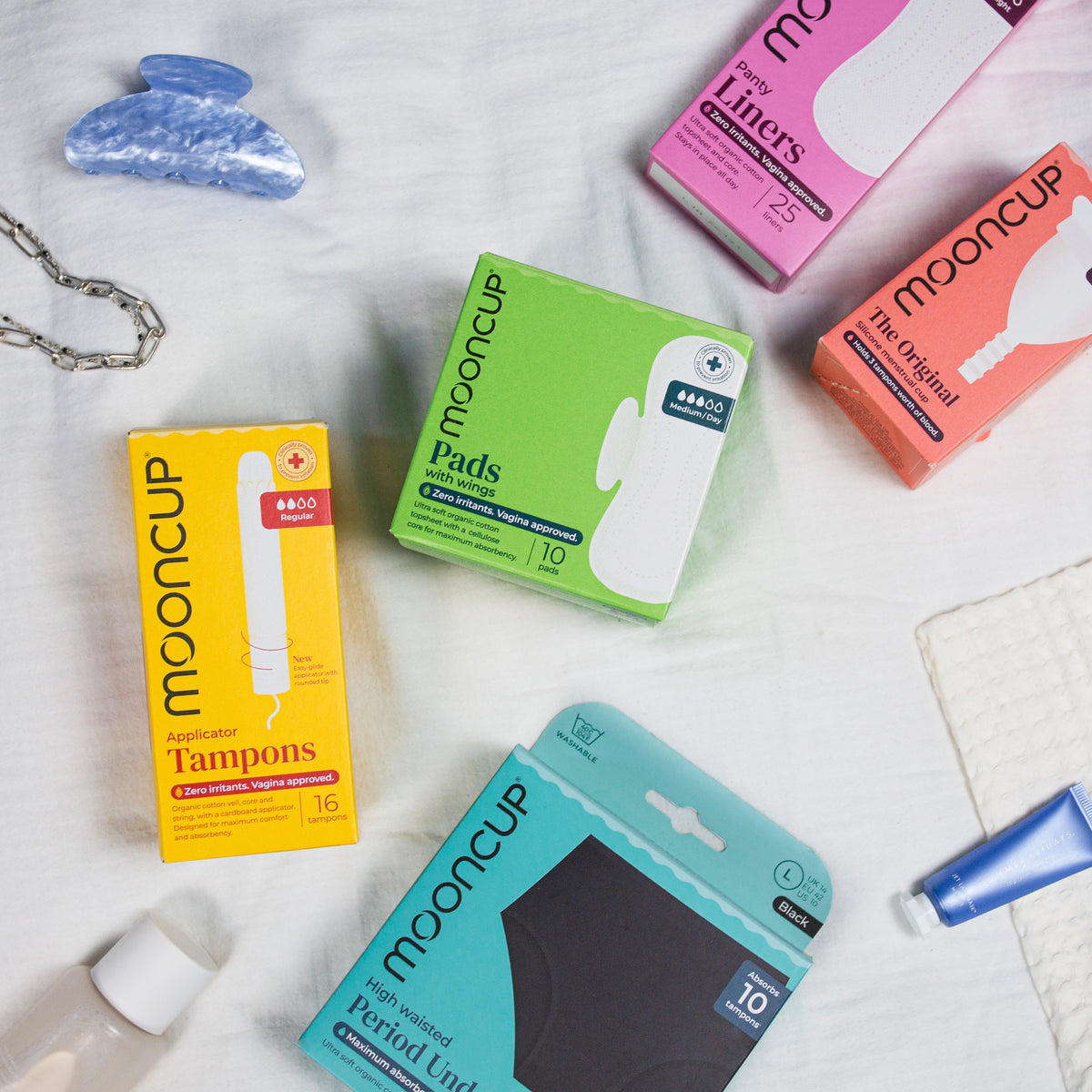
Our Mooncup Maternity & Postpartum Pads are designed specifically for lochia and postpartum discharge, with heavy-flow protection, secure wings and a 100% organic cotton topsheet.
No SAPs, synthetic fragrances or dyes.
Soft where it matters. Strong where it counts.
The NHS recommends packing two packets of maternity or super-absorbent pads in your hospital bag, with more ready at home.
And yes, you'll probably be glad you packed them.
2. Big, comfortable knickers
This is not the moment for complicated underwear.
Whether you're recovering from stitches, swelling or abdominal surgery, comfort is going to be high on your list of priorities.
Think soft fabrics, stretchy waistbands and enough coverage to hold a maternity pad securely in place.
High-waisted knickers can be particularly useful after a C-section, as they may help avoid rubbing against your incision.
And don't worry about what size is on the label.
Your body has just done something extraordinary. It doesn't need a deadline for fitting into your old underwear.
3. A peri bottle (or a good old-fashioned jug)
After a vaginal birth, your perineum may feel tender, particularly if you've had stitches or experienced tearing.
A peri bottle is a small, squeezable bottle that lets you gently rinse the area with warm water while using the toilet.
Some people find this more comfortable than wiping, especially during the first few days.
But you don't necessarily need a specialist product. A clean jug of warm water can do the job, too.
The important thing is following your midwife's advice about keeping the area clean and caring for any stitches.
4. Comfortable clothes that don't dig in
Your postpartum wardrobe doesn't need to be particularly exciting.
In fact, we'd actively encourage a little commitment to the oversized T-shirt.
Soft pyjamas, loose trousers, comfortable leggings and easy-to-wear layers can all make those early weeks more comfortable.
If you've had a C-section, avoid waistbands that rub against your incision.
And if you're breastfeeding or chestfeeding, you might prefer tops that make feeding easier.
This isn't about buying an entirely new wardrobe. It's about making sure you've got a few things you actually want to wear.
5. Protection that changes with your recovery
Here's something worth knowing before you stockpile six weeks' worth of maternity pads.
Your postpartum bleeding won't necessarily stay the same.
Lochia is usually heaviest in the first few days, gradually becoming lighter and changing colour as your uterus heals.
Which means the protection you need immediately after birth might not be what you need a few weeks later.
That's why we've created the Mooncup Bump to Baby Bundle.
Four essentials for changing postpartum needs:
-
Maternity & Postpartum Pads: Extra-long, wide protection for heavier bleeding after birth.
-
Heavy/Night Pads: Absorbent protection as your bleeding begins to settle.
-
Panty Liners: For lighter spotting and discharge.
-
High Waist Period Pants: Comfortable, reusable protection for lighter postpartum bleeding and periods further down the line.
Because your body changes. Your care should keep up.
Discover the Mooncup Bump to Baby Bundle
6. A water bottle you can reach with one hand
Not particularly glamorous. Extremely useful.
Between recovering from birth, feeding your baby and spending a surprising amount of time sitting in the same spot, it's easy to forget to drink enough water.
Keep a refillable bottle somewhere you'll actually use it, whether that's beside your bed, on the sofa or wherever you tend to feed your baby.
And while you're at it, keep a few snacks nearby.
Future you will appreciate it.
7. Something to make going to the toilet less intimidating
Nobody really prepares you for how much thought you might give to your first postpartum poo.
But after birth, particularly if you've had stitches or a C-section, going to the toilet can feel a little daunting.
Staying hydrated, eating fibre-rich foods and avoiding straining can help.
Some people also find it more comfortable to support their perineum with a clean pad or tissue while opening their bowels.
If you're struggling with constipation, speak to your midwife or GP about suitable treatment.
The NHS has practical advice on using the toilet after birth, including caring for stitches and managing constipation.
8. Feeding supplies that work for you
Whether you're breastfeeding, formula feeding or combining the two, having what you need within easy reach can make those first weeks a little easier.
That might mean breast pads, comfortable feeding bras, bottles, formula or simply a cushion that helps you find a comfortable position.
There's no single feeding setup that works for everyone.
And if feeding is painful, difficult or not going as expected, support is available through your midwife, health visitor and specialist feeding services.
You don't have to figure everything out on your own.
9. A few practical things you don't have to buy
Not every postpartum essential comes in a box.
In fact, some of the most useful things are the ones you can't add to your basket.
A friend who brings dinner rather than flowers.
Someone who puts a wash on without being asked.
A partner who knows where the clean maternity pads are.
A visitor who understands that holding the baby isn't necessarily the help you need.
Recovery isn't just about having the right products. It's about having time, space and support to heal.
And asking for that support shouldn't feel like an unreasonable request.
10. A little knowledge about what's normal (and what isn't)
Finally, one of the most useful things you can prepare before giving birth is knowing what to expect afterwards.
Postpartum bleeding, hormonal changes, afterpains and physical discomfort can all be part of recovery.
But that doesn't mean every symptom should be dismissed as normal.
Seek urgent medical help if you experience sudden, very heavy bleeding, particularly with dizziness, faintness or a pounding heartbeat.
You should also contact your midwife, GP or maternity unit if you're concerned about worsening pain, fever, unusual discharge or your emotional wellbeing.
The NHS guide to your body after birth is a useful starting point.
And remember, you don't need to wait until something feels unbearable to ask for help.
Your postpartum essentials checklist
Here's the short version, minus the things you probably don't need.
For your hospital bag:
-
Two packets of maternity or super-absorbent pads.
-
Five or six pairs of comfortable knickers.
-
Loose, comfortable clothes.
-
Toiletries and any prescribed medication.
-
Feeding essentials, depending on your plans.
-
A water bottle and snacks.
For recovery at home:
-
Extra maternity pads.
-
Heavy-flow pads or liners for when bleeding becomes lighter.
-
Comfortable underwear or period pants for later recovery.
-
A peri bottle or clean jug, if useful.
-
Easy meals and plenty of water.
-
Support with everyday tasks.
-
Contact details for your midwife, health visitor and GP.
You can find the full NHS hospital bag checklist here.
Care for the fourth. That bit when you're both in nappies.
There's a lot of preparation that goes into having a baby.
But the fourth trimester deserves a little preparation, too.
Not because you need to buy everything marketed to new mums. Quite the opposite.
Because having a few thoughtful essentials ready can make those first weeks more comfortable, leaving you with one less thing to think about while your body recovers.
Because birth isn't where the care stops.
Blog disclaimer
Our blog is intended to share information and ideas around periods, health, and sustainability. While we do our best to keep content accurate and up to date, things can change over time. The information here is not intended as medical advice — for any health-related concerns, please consult a qualified healthcare professional. For more information on our claims, please see our Claims Page, and for the most up-to-date product information, please visit our Product Pages.