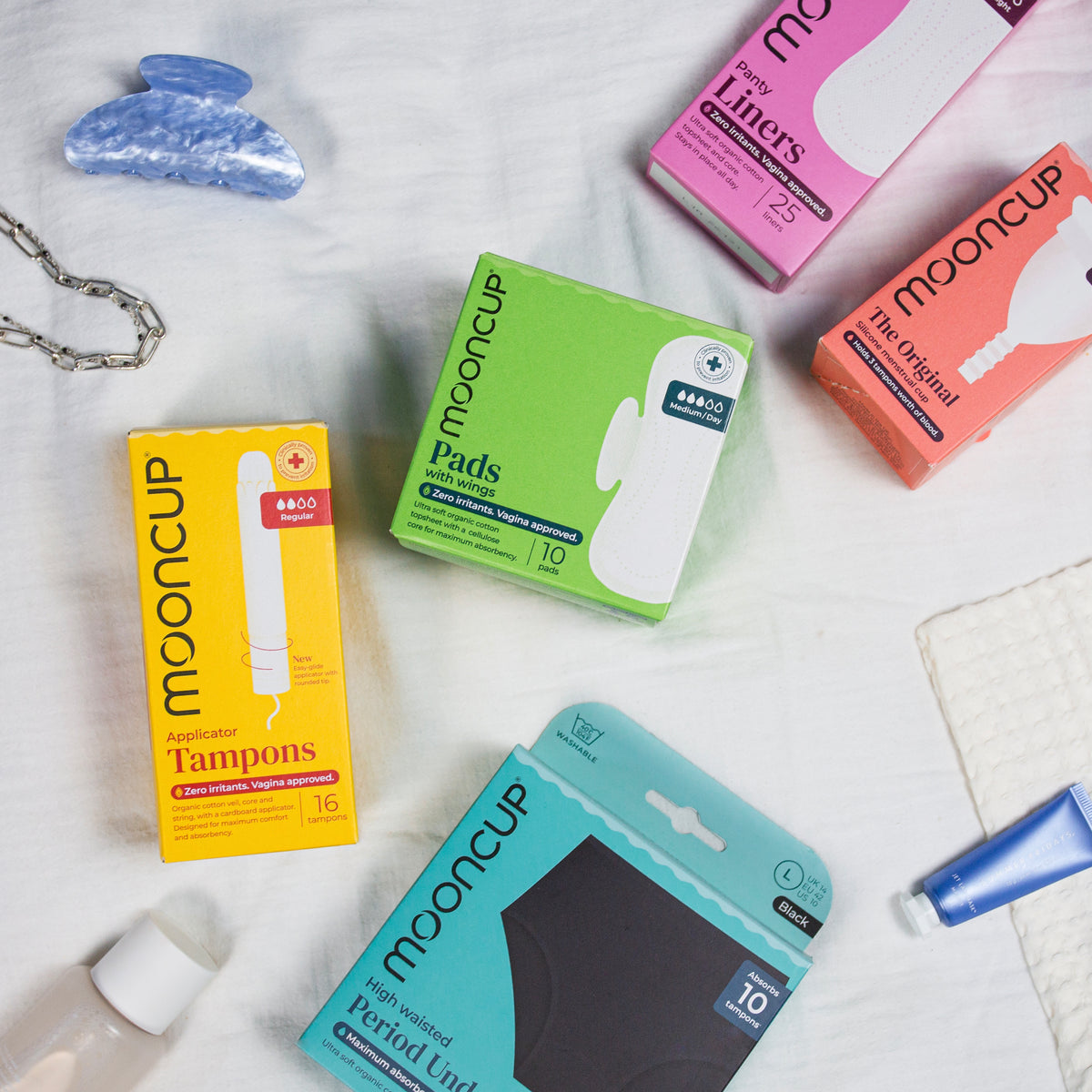
Pads are one of the most intimate products we use.
They sit directly against the vulva, for hours at a time, often on some of the most sensitive skin on the body.
And yet, pads don’t have to list their ingredients.
They’re the only everyday product in your bathroom that doesn’t have to tell you what it’s made of.
That’s the Bloody Fine Print.
The bit you’re not meant to notice
Everything else in your bathroom has ingredients.
Your shampoo lists its ingredients. Your moisturiser lists its ingredients. Your toothpaste lists its ingredients.
In the UK, period products aren’t legally required to do the same.
We think that’s worth noticing.
Instead, most pad packaging relies on vague, legally acceptable language like:
-
“Absorbent core"
-
“Soft topsheet”
-
“Odour control technology”
-
“Dermatologically tested”
These terms sound reassuring. Technical, even.
But they don’t actually tell you what the product is made of.
And crucially, that’s allowed.
Why pads don’t have to list ingredients.
In the UK, pad brands are not legally required to fully disclose their ingredients.
As long as certain safety standards are met, brands can stop at umbrella terms that describe how a pad works, not what it’s made from.
That’s not a loophole you imagined. It’s written into regulation. And it’s been quietly accepted for decades.
Same body. Different standards.
This is where the double standard starts to feel obvious.
If it wouldn’t be acceptable for skincare, or make-up to hide behind vague language, why is it normal for pads? Why is the product that sits against your vulva for hours at a time held to a lower standard of transparency than your shampoo?
That question is at the heart of the Bloody Fine Print.
It’s not accidental
Menstrual health has long been treated as niche, taboo, or “good enough as is”.
The result?
Lower expectations. Less scrutiny. And an industry where people are quietly expected not to ask too many questions.
The Bloody Fine Print exists to challenge that silence.
Not with scare tactics.
Not with gimmicks.
But by making the absence of information visible.
What transparency actually looks like
At Mooncup, we already list every ingredient in our pads.
Every layer. Every material. Every claim backed up.
We don’t wait for regulation to catch up before doing the right thing. And we don’t believe transparency should be a selling point. It should be the baseline.
Because if a product goes near your vulva, you deserve to know what it’s made of.
Why we’re talking about this now.
The Bloody Fine Print isn’t about telling you what to buy.
It’s about changing expectations.
About noticing something once, and never quite being able to unsee it again when you’re standing in the period care aisle.
Because once you realise pads don’t have to tell you what they’re made of, silence stops feeling neutral.
And transparency stops feeling optional.
Read the Bloody Fine Print.
We’re not asking for petitions or promises.
We’re asking you to notice.
To read what you’re given. And to question what’s missing.
That’s the Bloody Fine Print.
And once you see it, it’s hard to ignore.
Blog disclaimer
Our blog is intended to share information and ideas around periods, health, and sustainability. While we do our best to keep content accurate and up to date, things can change over time. The information here is not intended as medical advice — for any health-related concerns, please consult a qualified healthcare professional. For more information on our claims, please see our Claims Page, and for the most up-to-date product information, please visit our Product Pages.