Guest blog by Sara Stokes, founder of hormonal skincare brand SKN TO SKN, as part of our Care for the Fourth campaign.
Dry, spotty, suddenly sensitive? Your skin has been through a lot too. Here's what's going on, and what helps.
If you've just had a baby, this one's for you.
So much planning goes into the birth and the baby: the cot, the car seat, the tiny vests. What rarely makes the list is what happens to your own body afterwards, and that includes your skin.
We asked Sara Stokes, founder of the hormonal skincare brand SKN TO SKN, to explain why your skin changes in the fourth trimester and what you can do about it.
Why does your skin change after birth?
During pregnancy, your oestrogen and progesterone levels rise far higher than usual.
Once your baby and the placenta are delivered, those levels drop sharply, within days.
Oestrogen helps your skin hold on to water and keeps its barrier strong. The barrier is the outer layer that keeps moisture in and irritants out. So when oestrogen falls, skin often feels dry, tight or more sensitive.
If you're breastfeeding, oestrogen stays low for longer. Add broken sleep and stress hormones, and it's no wonder your skin feels out of sorts.
"Lots of women tell us their skin suddenly feels like it belongs to someone else. It's not anything you're doing wrong. It's your hormones resetting." Sara Stokes, founder of SKN TO SKN
Common skin changes, and what helps
Dryness and tightness
This is your skin barrier missing oestrogen's support.
Look for ceramides, which top up the natural fats in your barrier, and glycerin or hyaluronic acid, which draw water into the skin.
Skin hack - apply moisturiser while your skin is still damp to help lock that water in.
Spots and breakouts
Hormone shifts, stress and lack of sleep can all trigger breakouts.
Niacinamide (vitamin B3) helps calm spots and redness. Azelaic acid is another option and is generally considered suitable while breastfeeding.
Both are in our Muti-tasking Face Serum, alongside peptides and hyaluronic acid to clear and smooth skin that’s not playing ball.
Now is not the time for harsh exfoliants or peels, as these damage an already fragile barrier.
Sensitivity
Products you've used for years may suddenly sting.
As well as following the advice above, go fragrance-free (including essential oils) and patch test anything new.
Melasma (dark patches)
Pregnancy can cause melasma - darker patches of skin on your face.
This usually fades gradually after birth - but make sure you wear SPF 30 or higher every day, because sun makes those patches even darker.
The SKN TO SKN Glow & Go is perfect as the tint also helps blur any areas of discolouration.
Niacinamide and azelaic acid can help too.
Stretch marks
Most people will get stretch marks! They usually gradually fade into paler, less noticeable marks after birth, though they probably won't disappear completely.
Moisturising keeps the skin comfortable while they fade.
What sits against healing skin matters too
"It's not just the skin on your face that needs extra care. You'll bleed for weeks after birth, so pads with a 100% organic cotton topsheet, no fragrance and no dyes are exactly the kind of thing you want on skin that's still healing." Sara Stokes, founder of SKN TO SKN
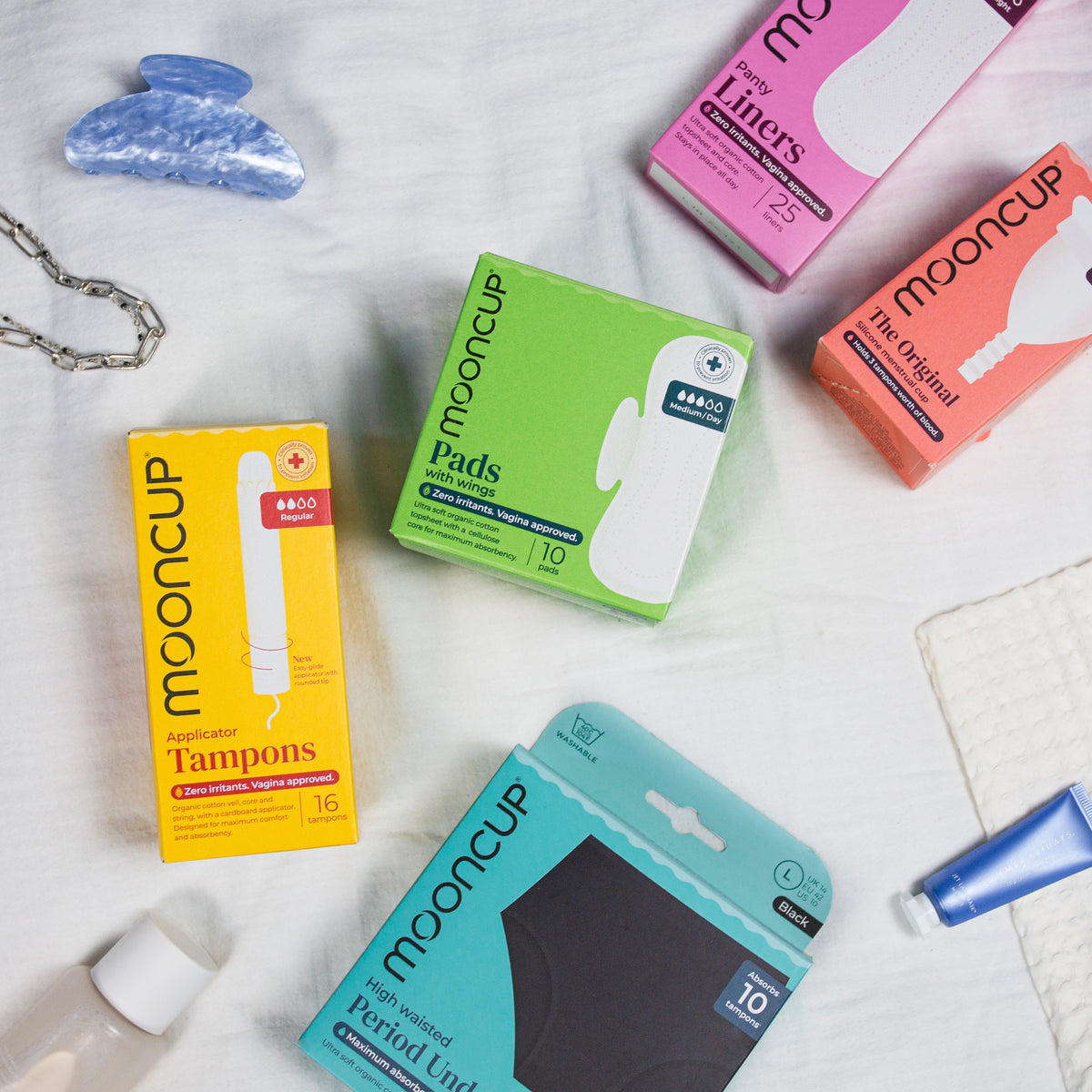
That's why we designed Mooncup Postpartum Pads specifically for postpartum recovery, with cushioned, absorbent protection. For more on what to expect, read our guide to how much postpartum bleeding is too much.
When to get advice
Most of these changes are normal and settle with time. Speak to your midwife, health visitor or GP if acne is severe or painful, a rash spreads or won't settle, or you're worried about any change in your skin.
Care doesn't stop at birth
Your body has just done something extraordinary. It deserves as much care afterwards as it got during pregnancy.
So enjoy those newborn snuggles, and remember to look after yourself too.
Sources