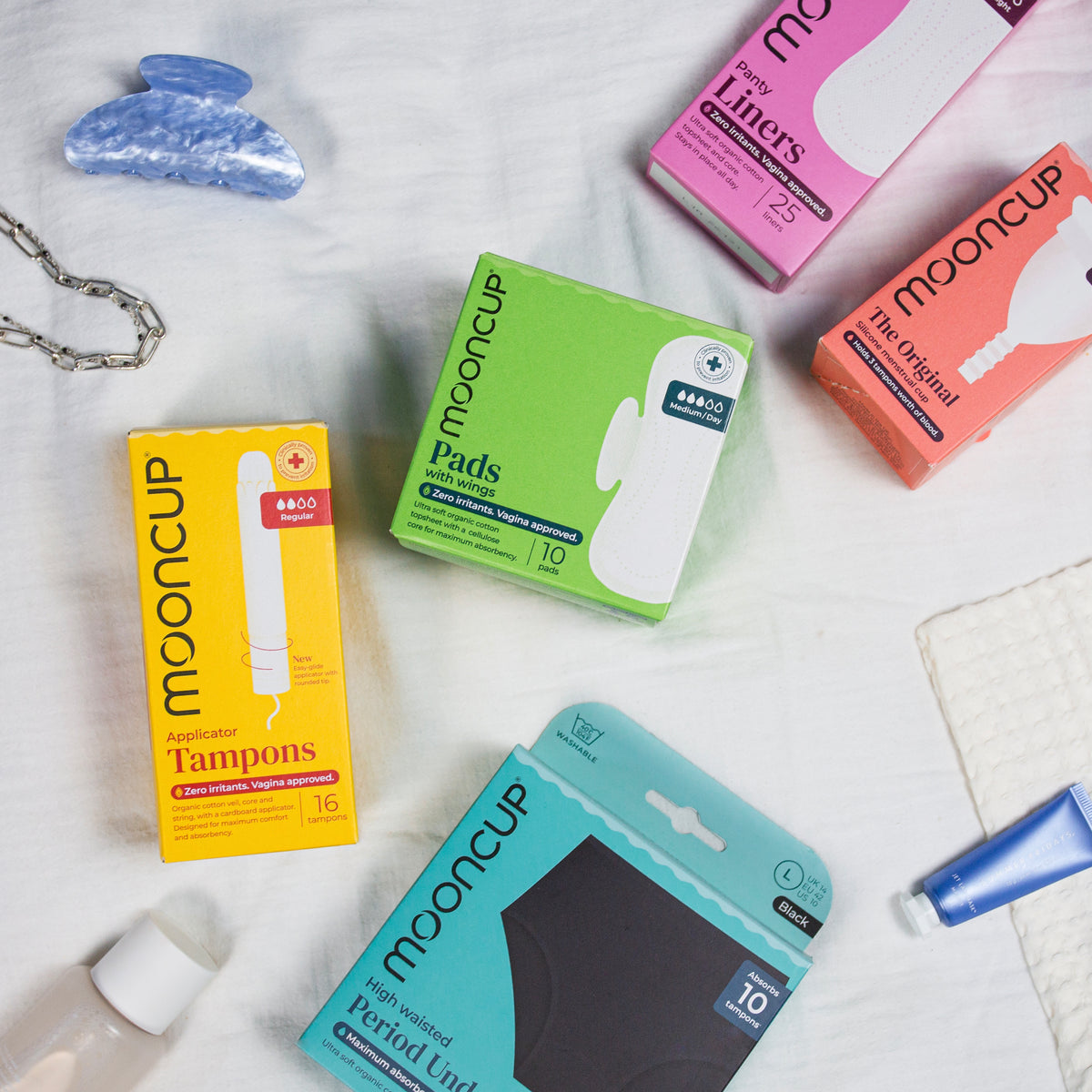
“Absorbent core” is one of those phrases you’ve probably seen a hundred times.
It sounds technical. Reassuring, even. It suggests performance. Reliability. Something engineered to do its job well.
But it doesn’t actually tell you very much.
What “absorbent core” is meant to do
At its simplest, an absorbent core is the part of a pad that absorbs menstrual fluid.
That much is true.
The problem isn’t what the phrase says. It’s everything it leaves out.
“Absorbent core” tells you how the product works. Not what it’s made of.
And that distinction matters.
What’s often inside an “absorbent core”
In many mainstream pads, the absorbent core relies on super absorbent polymers (SAPs).
SAPs are plastic-based materials designed to absorb and lock in large amounts of liquid. They’re used in everything from nappies to agricultural products because they’re extremely effective at what they do.
They’re also petroleum-derived. And they don’t biodegrade.
Once they’re in the environment, they stay there.
Why that matters for bodies
SAPs aren’t inherently illegal or universally unsafe. But their use in period products raises important questions, especially when they’re used in products that sit directly against the vulva for hours at a time.
Research has linked SAPs to issues like skin irritation and discomfort, particularly for people with sensitive skin or existing conditions.
There’s also historical context worth knowing.
In the 1980s, SAPs were banned from tampons after being linked to an increased risk of Toxic Shock Syndrome (TSS). While pads and tampons are used differently, that history is part of why transparency around materials matters.
If a material has raised safety questions in one form of period care, people deserve to know when it’s used in another.
Why you’re rarely told this
Here’s the key point: pad brands are not legally required to list their ingredients.
As long as safety standards are met, brands can describe pads using broad, functional language like “absorbent core” without disclosing the materials involved.
So the phrase does its job.
It reassures. It satisfies regulation. And it quietly avoids detail.
That’s the bloody fine print.
Why this would feel odd anywhere else
Imagine buying a moisturiser labelled: "hydrating core.”
No ingredient list. No breakdown. Just reassurance.
You’d expect more information because it goes on your skin.
Pads go on some of the most absorbent, sensitive tissue on the body. Yet the expectation of transparency is lower.
That’s the double standard.
What transparency actually looks like
At Mooncup, we don’t stop at “absorbent core”.
We tell you what it’s made from.
Our pads use an cellulose core, designed to deliver high absorbency without petroleum-based plastic.
It’s a different material choice and one we think people deserve to know about.
Not because everyone will make the same decision. But because everyone deserves the information.
Why this isn’t about fear
This isn’t about saying all pads are bad or that absorbency is a problem. It’s about saying that language shouldn’t replace disclosure.
That when a product category relies on vague terms instead of clear information, it’s worth asking why.
And that “absorbs liquid” isn’t the same as “here’s what it’s made of”.
Read past the headline
“Absorbent core” sounds like an answer.
It isn’t. It’s a starting point and one that often hides more than it reveals. Once you start noticing that, it becomes harder to accept silence as neutral.
That’s the Bloody Fine Print.
And it’s worth reading.
Blog disclaimer
Our blog is intended to share information and ideas around periods, health, and sustainability. While we do our best to keep content accurate and up to date, things can change over time. The information here is not intended as medical advice — for any health-related concerns, please consult a qualified healthcare professional. For more information on our claims, please see our Claims Page, and for the most up-to-date product information, please visit our Product Pages.