For something so small, tampons come with a surprising amount of lore.
Sleeping in them. Swimming in them. Peeing with them. Whether the string needs to be tucked, moved, cut, protected from pool water or otherwise given its own risk assessment.
And approximately 400 other things someone once told you in a school bathroom that you’ve never thought to question.
So, let’s pull the string on some of the biggest, weirdest and most persistent tampon myths.
Myth #1: A tampon can get lost inside you
Good news: your vagina is not an abyss.
A tampon can move higher up in the vagina, turn sideways or occasionally become more difficult to reach, but it can’t wander off into the rest of your body.
Your cervix sits at the top of the vaginal canal, and its opening is too small for a tampon to pass through.
What should I do if my tampon feels like it’s gone too far?
First, don’t go searching for it with tweezers or anything else that absolutely does not belong up there.
Wash your hands and try to relax. Squatting or sitting on the toilet and gently bearing down can help bring the tampon within reach. Use your fingers to feel for the string or tampon and gently remove it.
If you can’t remove it yourself, contact a healthcare professional. A stuck tampon is something they can help with.
Myth #2: You shouldn’t sleep with a tampon in
You can. Just watch the clock.
It’s fine to sleep with a tampon in as long as you follow the recommended wear time. Put in a fresh one before bed and remove it when you wake up, making sure you never leave a tampon in for longer than eight hours.
Leaving a tampon in for too long can increase the risk of toxic shock syndrome (TSS), so this is one occasion where you don’t want it having a lie-in.
If you prefer an internal period product you can wear for longer, a menstrual cup is another option. A Mooncup can be worn for up to 12 hours, depending on your flow.
Sleep tight. Just don’t let your tampon oversleep.
Myth #3: You need to change your tampon every time you pee
Nope. Different exits.
Pee leaves your body through your urethra. Your tampon sits inside your vagina.
So there’s no need to change your tampon every time you go for a wee.
If you want to keep the string out of the way, gently pull it to the side before you pee.
The string getting caught in the crosspee, however, is between you and the cubicle walls.
Myth #4: You can’t swim with a tampon in
Tell that to approximately every person who has ever started their period on day two of a beach holiday.
You can absolutely swim while wearing a tampon.
A correctly inserted tampon will continue to absorb your menstrual blood while you’re swimming. It may also absorb a little water, so it’s a good idea to change it after you get out.
Your period does not require you to sit beside the pool guarding everyone else’s bags.
Myth #5: Pool water can travel up your tampon string
This one is spectacularly specific, and people really do worry about it.
Your tampon string can get wet while you swim and may absorb some water. That doesn’t mean it becomes a tiny waterslide delivering the contents of the local lido directly into your vagina.
Changing your tampon after swimming is sensible, particularly if it has absorbed water.
But no, the string isn't secretly functioning as a straw.
Myth #6: You should cut your tampon string before swimming
Please don’t give your tampon a haircut.
There’s no need to cut the string before you get in the water. In fact, that string has a fairly important job waiting for it later.
If you’re worried about it peeking out of your swimwear, you can simply tuck it out of the way.
Scissors can remain in the beach bag.
Myth #7: You have to change your tampon the second you get out of the pool
You don’t need to emerge from the water and immediately sprint towards the nearest bathroom.
But because a tampon can absorb some water while you swim, changing it once you’re out and have access to a bathroom is a good idea.
Which is slightly different from “GET OUT OF THE WATER, THE CLOCK IS TICKING.”
Myth #8: Swimming on your period is unhygienic
Nope.
Having your period doesn’t make you unhygienic, and it doesn’t make you a public swimming pool biohazard.
If you’re using a suitable internal period product such as a tampon or menstrual cup, there’s no reason your period should stop you swimming.
No exile to the sun lounger required.
Myth #9: You’re too young to use tampons
There isn’t a magic birthday when the Tampon Council finally hands over your membership card.
Tampons can be used from your first period if you want to use them.
For someone trying them for the first time, a lower absorbency can be easier to insert, particularly on a lighter flow. Take your time, read the instructions and don’t force anything that feels painful.
And using a tampon has nothing to do with whether or not you’ve had sex.
Myth #10: Tampons can take your virginity
While we’re here: no.
Virginity isn’t something a tampon can take away.
You might have heard that inserting a tampon can “break” the hymen, but the hymen isn't a freshness seal across the vagina. It's stretchy tissue around the vaginal opening that naturally varies enormously between people and can change over time for all sorts of reasons.
Whether somebody uses tampons tells you precisely nothing about whether they’ve had sex.
Consider that particular piece of school bathroom folklore retired.
Myth #11: If you can feel your tampon, you just need to get used to it
A correctly inserted tampon generally shouldn’t be something you can feel while you’re going about your day.
If it feels uncomfortable, it may not be inserted far enough or could be sitting at an awkward angle. Removing it and trying again with a fresh tampon may help.
And there’s a difference between “this is new and I’m figuring it out” and actual pain.
If inserting or wearing tampons regularly hurts, don’t simply grit your teeth and decide this is your life now. Stop using them and speak to a healthcare professional.
Myth #12: The highest absorbency tampon is the best one
More absorbent does not mean more advanced.
Your tampon absorbency should match your flow. FDA guidance recommends using the lowest absorbency needed to manage it.
If you regularly remove a tampon after several hours and it’s still mostly dry, try a lower absorbency.
Apart from anything else, removing a dry tampon is an experience nobody needs to add to their day.
Myth #13: You can put a tampon in just in case your period starts
It sounds efficient.
You’re expecting your period. You’re wearing white trousers. You’re going somewhere with toilets of questionable availability.
Pre-emptive tampon?
Better not.
Tampons are designed to absorb menstrual blood and should only be used during your period.
Using one when you’re not bleeding can also make removal uncomfortable because there’s less moisture for the tampon to absorb.
Keep one in your bag instead. Your vagina does not need to become the storage compartment.
Myth #14: You should use two tampons if your period is really heavy
One vagina. One tampon.
Using two at once isn't a clever way of doubling your protection. It can make removal more difficult and increases the chance of accidentally leaving one behind.
Instead, choose an appropriate absorbency for your flow or pair your tampon with a pad or period underwear if you want backup.
If you’re regularly soaking through tampons very quickly or your bleeding is affecting your everyday life, speak to a healthcare professional about your heavy periods.
Myth #15: Tampons cause TSS
This one needs a little more nuance.
Using a tampon does not mean you’re going to get toxic shock syndrome.
TSS is a rare but potentially life-threatening condition caused by certain bacteria getting into the body and releasing toxins. It can happen to anyone, including people who don't menstruate. But tampon use is associated with TSS, which is why using them correctly matters.
Use the lowest absorbency you need, change your tampon regularly and never leave one in for more than eight hours.
Symptoms of TSS can develop quickly and include a high temperature, muscle aches, vomiting or diarrhoea, dizziness or confusion, and a rash. If you’re using a tampon and think you may have TSS, remove it and seek urgent medical help.
Rare? Yes.
A myth we should dismiss completely? Absolutely not.
Myth #16: You can flush tampons
Even the organic cotton ones.
Tampons are designed to absorb liquid and expand.
Excellent quality in a tampon.
Less excellent quality in your plumbing.
Used tampons should be wrapped up and put in the bin, not flushed down the toilet.
Myth #17: You need an applicator to insert a tampon properly
This one depends enormously on where you grew up.
Applicators are common in some countries, while non-applicator tampons are completely normal in others. Neither is required for a tampon to “work”.
An applicator is simply one way of helping position the tampon inside the vagina. Some people find them easier or prefer not having to insert the tampon with their fingers. Other people happily use non-applicator tampons.
There is no correct tampon faction to join.
Myth #18: Tampons stretch your vagina
Nope.
The vagina is made from muscular, elastic tissue. Using tampons isn't going to permanently stretch it or make it “loose”.
And while we’re throwing things into the school bathroom myth bin, the idea that the size or “tightness” of someone’s vagina tells you anything about how much sex they’ve had can go in there too.
Bin lid closed.
Myth #19: You need to change your tampon every time you poo
Not necessarily.
Your tampon sits in your vagina and poo exits through your anus, so having a bowel movement doesn't automatically mean your tampon needs to come out.
Bearing down can sometimes shift a tampon, though. And if the string gets dirty, change it rather than trying to negotiate with yourself about how dirty is too dirty.
We have now officially covered every possible interaction between a tampon and a toilet.
Myth #20: Tampons should hurt a little
No medal for suffering through your period care.
A tampon might take a little practice when you first start using one, but once it’s properly positioned, wearing it shouldn't be painful.
If a tampon hurts, feels uncomfortable or repeatedly feels difficult to insert, stop and try another period product rather than forcing it.
Persistent pain when inserting anything into your vagina is worth discussing with a healthcare professional.
So, what actually matters?
After all that lore, the genuinely important tampon stuff is pleasingly uncomplicated.
Use the lowest absorbency that works for your flow. Change your tampon regularly and never leave one in for more than eight hours. Wash your hands before and after inserting one. Don't use tampons when you're not menstruating. And if something hurts, feels wrong or you can't remove one, ask a healthcare professional for help.
Everything else?
Maybe don't automatically trust something somebody’s cousin told you in the school toilets in Year 9.
While we’re talking tampons…
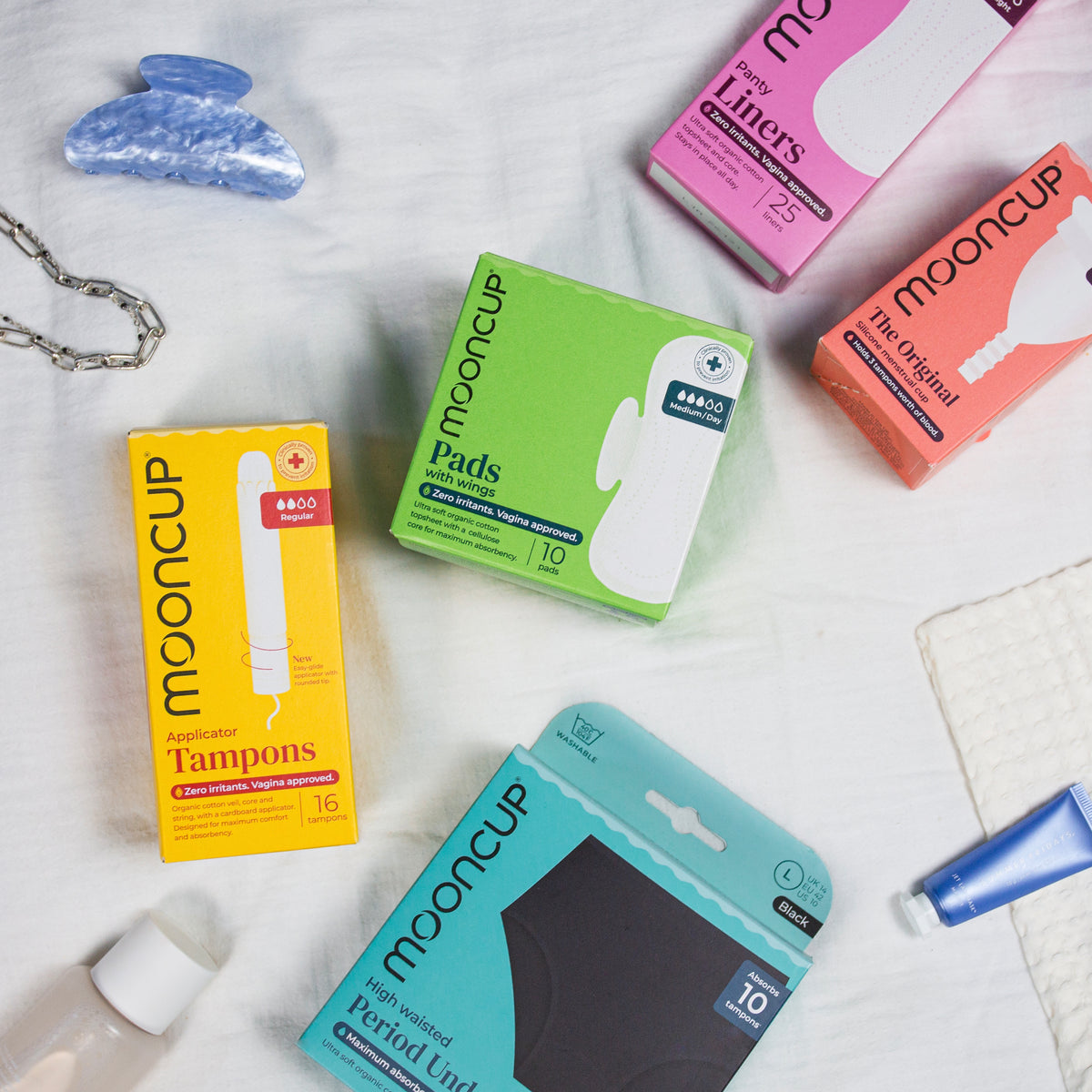
Our Mooncup Applicator Tampons are made from 100% organic cotton, with an easy-glide, plastic-free cardboard applicator.
Available in Regular and Super, so you can choose the absorbency that works for your flow.
Tampon myths: busted. Tampons: sorted.
Blog disclaimer
Our blog is intended to share information and ideas around periods, health, and sustainability. While we do our best to keep content accurate and up to date, things can change over time. The information here is not intended as medical advice — for any health-related concerns, please consult a qualified healthcare professional. For more information on our claims, please see our Claims Page, and for the most up-to-date product information, please visit our Product Pages.