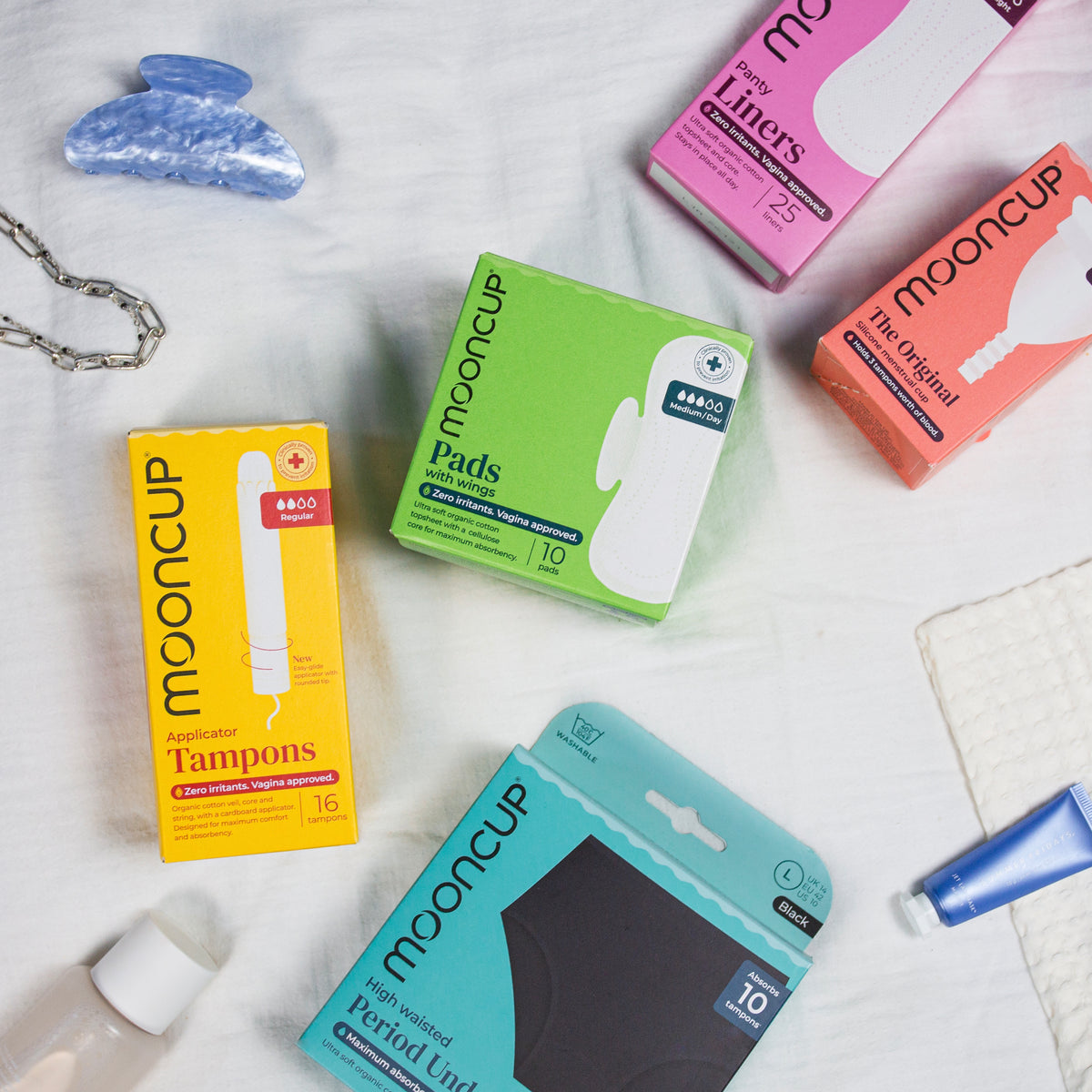
On pad packaging, “adhesives” usually get a single word.
No explanation. No breakdown. No detail.
They’re there to do a job - to keep the pad in place - but the language rarely goes any further than that.
And because pads don’t have to list their ingredients, it usually stops there.
That’s the Bloody Fine Print.
What adhesives are actually doing.
Adhesives are used to:
-
Bond the different layers of a pad together.
-
Attach the pad to underwear.
-
Keep everything stable during movement.
They’re a functional necessity.
But what those adhesives are made from matters, especially in a product that sits close to the vulva for hours at a time.
What pad adhesives can be made from.
In many consumer products, including hygiene products, adhesives can contain substances such as:
-
Latex
-
Rosin (also called colophony)
-
Synthetic resins and bonding agents
These materials are commonly used in pressure-sensitive adhesives because they’re effective and durable.
But they’re also well-documented allergens.
Why latex and rosin matter
Latex
Latex allergy is a recognised medical condition. Exposure can cause:
-
Skin irritation
-
Itching or redness
-
Contact dermatitis
For people with latex sensitivity, even indirect or repeated contact can trigger symptoms - particularly in warm, moist environments like intimate skin.
Rosin (colophony)
Rosin is a natural resin derived from pine trees and is one of the most common causes of allergic contact dermatitis worldwide.
It’s frequently used in adhesives, cosmetics, and medical tapes - and is a well-known sensitiser in dermatology.
When rosin appears in products without clear disclosure, people with known sensitivities can’t easily avoid it.
The problem isn’t adhesives. It’s silence.
To be clear: this isn’t about saying all adhesives are unsafe.
It’s about the fact that people aren’t told what adhesives are made from - even when those materials are known allergens.
In almost any other product category, ingredients linked to allergic reactions would be clearly disclosed.
Pads are treated differently.
Same body. Different standards.
Why this matters for intimate skin.
The vulva is more permeable and sensitive than most other skin on the body.
Repeated exposure to irritants - even in small amounts - can increase the risk of irritation or dermatitis over time, particularly for people with existing sensitivities.
If a product relies on adhesives that may contain known allergens, that’s information people deserve to have.
What transparency actually looks like.
At Mooncup, we don’t hide adhesives behind a single word. We tell you what they’re made from.
Our pads use non-toxic adhesives, and we clearly state that they’re free from latex and rosin so people with sensitivities don’t have to guess.
Not because everyone will react. But because no one should be kept in the dark.
This isn’t about fear. It’s about choice.
Adhesives are easy to overlook. That’s why they matter.
When something sits close to your body for hours, every layer counts - including the ones you never see.
That’s the Bloody Fine Print.
And it applies even to the smallest details.
Blog disclaimer
Our blog is intended to share information and ideas around periods, health, and sustainability. While we do our best to keep content accurate and up to date, things can change over time. The information here is not intended as medical advice — for any health-related concerns, please consult a qualified healthcare professional. For more information on our claims, please see our Claims Page, and for the most up-to-date product information, please visit our Product Pages.